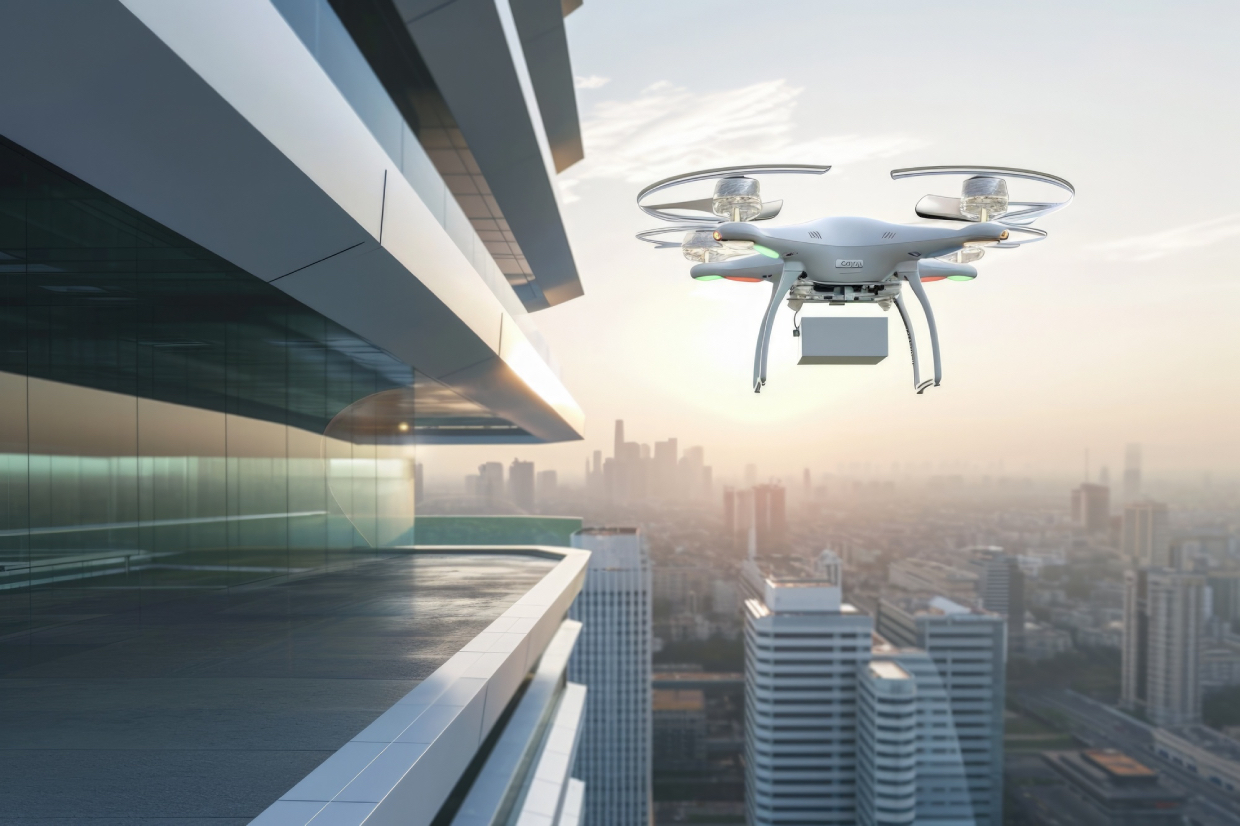
6 Legal Responsibilities in Drone Use
6 Legal Responsibilities in Drone UseUnmanned Aerial Vehicles (UAVs) and drone technologies have triggered one of the fastest transformations in civil aviation history. Moving beyond being mere technological gadgets, they have become cornerstones for various sectors ranging from transportation to agriculture, and security to cinematography. In Türkiye, the management of this dynamic field is strictly carried out within the framework of instructions issued by the Directorate General of Civil Aviation (DGCA/SHGM) and the Turkish Civil Aviation Act No. 2920. As of 2026, new administrative fines and audit modules have transitioned drone usage from a simple hobby into a serious area of legal responsibility requiring aviation discipline. This report analyzes the six main legal responsibilities that drone users and operators must comply with, in light of the most current legislative data, 2026 sanctions, and judicial decisions.
Responsibility 1: Registration, Placement, and Technical Identification
The legal status of any unmanned aerial vehicle to be operated in Turkish airspace begins with the accuracy of its registration on the system. The legislation divides UAVs into four main classes based on their Maximum Take-Off Weight (MTOW) and envisages a different registration regime for each class. This classification is the primary criterion determining the vehicle’s risk potential and integration capacity into the airspace.
UAV Classification and Registration Thresholds
All UAVs weighing 500 grams and above must be registered in the internet-based registration system (iha.shgm.gov.tr) created by the DGCA. While vehicles under 500 grams are generally considered “toy” class, they are not exempt from safety rules if they have cameras or high-altitude capabilities. However, as soon as the 500-gram threshold is exceeded, the vehicle enters the direct audit area of the Turkish civil aviation authority and the obligation to have an identification number arises.
| UAV Class | Maximum Take-Off Weight (MTOW) | Registration Regime |
| UAV0 | 500 g (inclusive) – 4 kg | Internet-Based Registration System |
| UAV1 | 4 kg (inclusive) – 25 kg | Internet-Based Registration System |
| UAV2 | 25 kg (inclusive) – 150 kg | Registration in the Turkish Aircraft Registry |
| UAV3 | 150 kg (inclusive) and above | Registration in the Turkish Aircraft Registry |
Time Limits and Notification Responsibility
Drone ownership is subject to strict notification periods, much like motor vehicle ownership. An individual or business purchasing a new vehicle is obliged to register it in the system within 3 days at the latest. In import or domestic production processes, the responsibility is moved even earlier; companies making the sale must enter the vehicle information and buyer identity data into the system on the same day. In second-hand transfer transactions, the most critical issue is that the seller creates a “Transfer Request” through the system and the buyer approves this request within 3 days. If this period is exceeded, the transaction is canceled and an administrative sanction risk arises for the parties.
Updates that came into effect as of 2026 have set the fine for making a false declaration during registration at 100,000 TL. This aims to prevent drones from being flown anonymously and to ensure that the responsible party can be identified within seconds in the event of an accident or violation. The physical aspect of this technical identification is formed by processing the QR-coded plate or identification number created in the registration system onto the vehicle and the ground control station in a way that cannot be erased.
Responsibility 2: Pilot Certification and Training Competencies
The use of drone technology requires not only a mechanical skill but also an intellectual competence covering aviation law, meteorology, navigation, and emergency procedures. The legal responsibility of the pilot is based on a gradual certification process according to the class of the vehicle used and the purpose of use.
Amateur and Commercial Distinction
For those flying drones for hobby purposes, a training declaration approved through the DGCA system is sufficient for vehicles between 500 grams and 4 kg (UAV0), while UAV1 hobby piloting is also possible provided they have turned 15. However, if the activity acquires a “commercial” character (advertising, film shooting, mapping, agriculture, etc.), it is mandatory for the pilot to receive formal training from organizations authorized by the DGCA and hold a certificate.
| Certificate Type | Training Duration (Hours) | Minimum Age Limit | Renewal/Medical Requirement |
| UAV0 Commercial | 12 Hours | 12 | Declaration Every 5 Years |
| UAV1 Commercial | 36 Hours | 15 | Declaration Every 5 Years |
| UAV2 License | 90 Hours | 18 | Class 2 Medical Report |
| UAV3 License | 150 Hours | 18 | Class 2 Medical Report |
Continuity and Preservation of Piloting Skills
Especially in heavy classes like UAV2 and UAV3, pilots are subject to a licensing process just like manned aircraft pilots. These licenses are issued for 5 years, but the pilot must remain “active” during this period. A pilot who has not performed at least 3 take-offs and landings in the last 180 days cannot manage flight activities. Furthermore, documenting that at least 12 hours of flight and 12 take-offs/landings were performed in the last 12 months before the license expires is a legal requirement to extend the license for another 3 years. The purpose of these rules is to minimize the margin of error in managing complex systems and to keep flight safety at the highest level.
Responsibility 3: Airspace Usage and Flight Permit Processes
The most critical responsibility of drone pilots is to check the airspace status of the area where the flight will be conducted and to obtain permission from the necessary authorities. Turkish airspace is divided into color-coded regions for reasons of flight safety and national security.
Prohibited Zones (Red Zones) and Altitude Limits
Flights around airports, military facilities, prisons, fuel depots, and public buildings are defined as “Red Zones,” and flying in these areas without permission is strictly prohibited. For airports, this boundary covers a radius of 9 kilometers (5 nautical miles) starting from the nearest runway edge. In accordance with general flight rules, unless otherwise permitted, drone flights must be carried out at a maximum height of 120 meters (400 feet) from the ground. This limit is a vital barrier preventing drones from conflicting with general aviation traffic (planes, helicopters).
Civil Administration Module and Coordination
The “Civil Administration Module,” which was put into full operation as of 2024, is a bureaucratic revolution in flight permit processes. Commercial or restricted area flight permits below 400 feet are no longer evaluated through the DGCA, but directly by the relevant Governorates or District Governorates. The pilot must submit an application at least 10 business days before the flight date and provide detailed information about the purpose, coordinates, and duration of the operation. Flights carried out without an approved permit document are subject to heavy sanctions according to the 2026 penalty tariff.
Visual Line of Sight (VLOS) and Night Flight Restrictions
Within the scope of legal responsibilities, it is essential for the pilot to keep the vehicle within the “Visual Line of Sight” (VLOS) that can always be seen with the naked eye; this distance generally should not exceed 500 meters horizontally. Night flights are prohibited as a rule and can only be performed with special equipment (standard lighting and strobe lights) and special permission from the civil administration. Since night operations increase the risk of the pilot losing orientation and not being noticed by other aircraft, inspections in this area are stricter.
Responsibility 4: Financial Liability and Third-Party Insurance Obligation
Drone operations carry serious risks in terms of material and physical damage that can be caused to third parties. The financial management of these risks has been included in the scope of compulsory insurance in Turkish civil aviation legislation.
For Whom is Insurance Mandatory?
In Türkiye, the UAV insurance obligation is determined on two main axes:
- Weight-Based: All vehicles 25 kg and above (UAV2 and UAV3) must be insured regardless of the purpose of use.
- Activity-Based: It is legal to have Third-Party Liability Insurance for UAVs of any weight (including UAV0 and UAV1) that perform any kind of commercial activity.
Although insurance is not mandatory for light drones used for hobby purposes, the entire material and moral compensation liability arising at the time of an accident is directly directed towards the personal assets of the drone owner. Insurance covers these burdens within the SDR (Special Drawing Rights) limits specified in the policy.
Coverage Limits and SDR Rates
Policy limits are applied at rates varying according to the weight of the vehicle over the minimum amounts determined in accordance with Regulation No. 25994.
| UAV Class | Commercial Use Coverage Rate | Hobby Use Coverage Rate |
| UAV0 (0.5-4 kg) | 8% | 0% (Optional) |
| UAV1 (4-25 kg) | 20% | 0% (Optional) |
| UAV2 (25-150 kg) | 40% | 10% |
| UAV3 (150-500 kg) | 80% | 20% |
Based on the updated traffic insurance and general liability limits as of 2026, the increase of the disability and death coverage per person to 3,600,000 TL shows the magnitude of the financial risk that drone pilots may face in the event of an accident. The penalty for flying without insurance is not only a fine but also the cancellation of the flight permit and the grounding of the vehicle.
Responsibility 5: Personal Data and Protection of Privacy
The area of responsibility for drones that is most discussed and most frequently reflected in judicial authorities is privacy violations. Recordings made with drone cameras are subject to heavy sanctions under the Turkish Penal Code (TPC) and the Law on Protection of Personal Data (KVKK).
Crimes Under the Turkish Penal Code
Interventions carried out with drones targeting the privacy of private life constitute the crime of “Violation of the Privacy of Private Life” pursuant to TPC Art. 134.
- Unauthorized Imaging: Imaging a person in their home, garden, or an area where there is an expectation of privacy without their consent provides for a prison sentence of 1 to 3 years.
- Recording and Disclosure: If these images are recorded, the penalty is increased by onefold; if shared on social media or the internet, the sanction becomes even heavier.
- Law Enforcement Audit: Audits carried out by law enforcement with drones are also subject to legality review. The Council of State canceled circulars prohibiting the police from taking audio and video recordings in public areas, certifying that fundamental rights can only be limited by law and arbitrary monitoring would violate private life.
KVKK and Data Processing Principles
In the processing of data collected by drone (face, plate, location, etc.), the principles of “proportionality” and “transparency” are essential. If a commercial shoot is being made, data subjects must be informed and their explicit consent must be obtained. The Vukota-Bojic v. Switzerland decision of the European Court of Human Rights (ECHR) states that the “systematic and permanent” recording of images in public areas exceeds the threshold of intervention in private life. This means that continuous surveillance activities carried out with drones could constitute unlawful evidence and create liability for compensation.
Responsibility 6: Technical Maintenance and Operational Safety Records
The sustainability of aviation safety is possible with the tracking and reporting of the technical condition of the vehicles. The drone pilot and operator are obliged to guarantee that the vehicle is “safe” for every flight.
Maintenance Log and the 3-Year Rule
Keeping a “Flight Logbook” is a legal requirement for UAV2 and UAV3 class vehicles. In UAV0 and UAV1 classes, commercial pilots must record maintenance and repair activities and keep these records for 3 years. Every replaced part, every software update, and battery cycles must be included in these records.
| Maintenance Item | Responsible Party | Retention Period | Legislative Basis |
| Periodic Maintenance Record | Pilot/Operator | 3 Years | SHT-UAV Article 9 |
| Part Replacement Invoice | Pilot/Operator | 3 Years | SHT-UAV Article 9 |
| Safety Declaration | Pilot | Updated Annually | SHT-UAV Article 6 |
| Flight Logbook | UAV2/3 Pilot | Lifetime | SHT-UAV Article 14 |
Reporting Safety Incidents (48-Hour Rule)
Technical malfunctions that endanger flight safety, drone accidents, or situations such as “near-misses” must be reported to the DGCA within 48 hours of the incident at the latest. This reporting is not just a bureaucratic procedure, but also critical safety data to prevent similar technical errors from occurring in other aircraft. Violation of the reporting obligation can lead to administrative sanctions up to the cancellation of the operator’s certificate.
2026 Administrative Fines and Sanction Regime
The year 2026 has been the year in which audits on drone use have reached the highest level in terms of cost. With the 25.49% increase in the revaluation rate, even a simple rule violation leads to fines exceeding the cost of the drone itself.
| Violation Subject | 2026 Individual Fine (TL) | 2026 Business Fine (TL) |
| Flying Without Permission | 98,762 TL | 164,613 TL |
| Flight in Prohibited Zone | 98,762 TL | 164,613 TL |
| Risking Flight Safety | 164,613 TL | 164,613 TL |
| Unregistered UAV Use | 18,061 TL | 180,617 TL |
| False Data Entry | 100,000 TL | 100,000 TL |
| Laser Pointing / Interference | 164,613 TL | 164,613 TL |
These high fines are a result of the DGCA’s “zero error” policy. The cost of an unauthorized commercial drone flight (98,762 TL) is more than the price of a mid-segment professional drone. This is the strongest motivator forcing commercial operators to full compliance with legal processes.
Conclusion and Strategic Recommendations
The use of Unmanned Aerial Vehicles and drones in Türkiye has completely ceased to be an “uncontrolled technology area” and has turned into a professional branch of aviation where every second can be tracked and every violation is tied to heavy sanctions. The six fundamental responsibilities examined (Registration, Certification, Permit, Insurance, Privacy, and Maintenance) form interconnected links for a safe sky ecosystem.
As of 2026, it is of vital importance for drone operators to follow this strategy:
- Registration and Transfer: Complete registration procedures on the day the vehicle is received and never exceed the 3-day legal period.
- Certificate and Health: Obtain approved certificates from authorized training institutions for commercial activities and check validity periods periodically.
- Airspace Awareness: Check the region through the “UAV Registration System” before every flight and do not take off without written permission from the civil administration.
- Financial Assurance: Have comprehensive third-party liability insurance not just because it is mandatory, but for the sake of risk management.
- Ethics and Law: Pay maximum attention to privacy boundaries in camera use and always consider the TPC Art. 134 risk.
- Technical Discipline: Keep maintenance records meticulously and test emergency systems (RTH, Failsafe) before every flight.
Türkiye’s UAV legislation shows a safety-oriented development in harmony with European Union standards. Compliance with these rules is not only a legal requirement but also a prerequisite for being a prestigious and reliable part of the rapidly growing drone economy. Freedom in the sky can be protected with the awareness of legal responsibility on the ground.
Our Latest Articles
Önceki Yazılar

Crowdfunding Platforms 2026
Crowdfunding Platforms 2026. Crowdfunding is a revolutionary financial model that brings together entrepreneurs with limited…

Freelancers’ Rights 2026
Freelancers’ Rights 2026. The global standardization of digital transformation and flexible working models has brought…

Passenger Rights in Case of Flight Cancellation and Delay
Passenger Rights in Case of Flight Cancellation and Delay. The civil aviation sector is recognized…