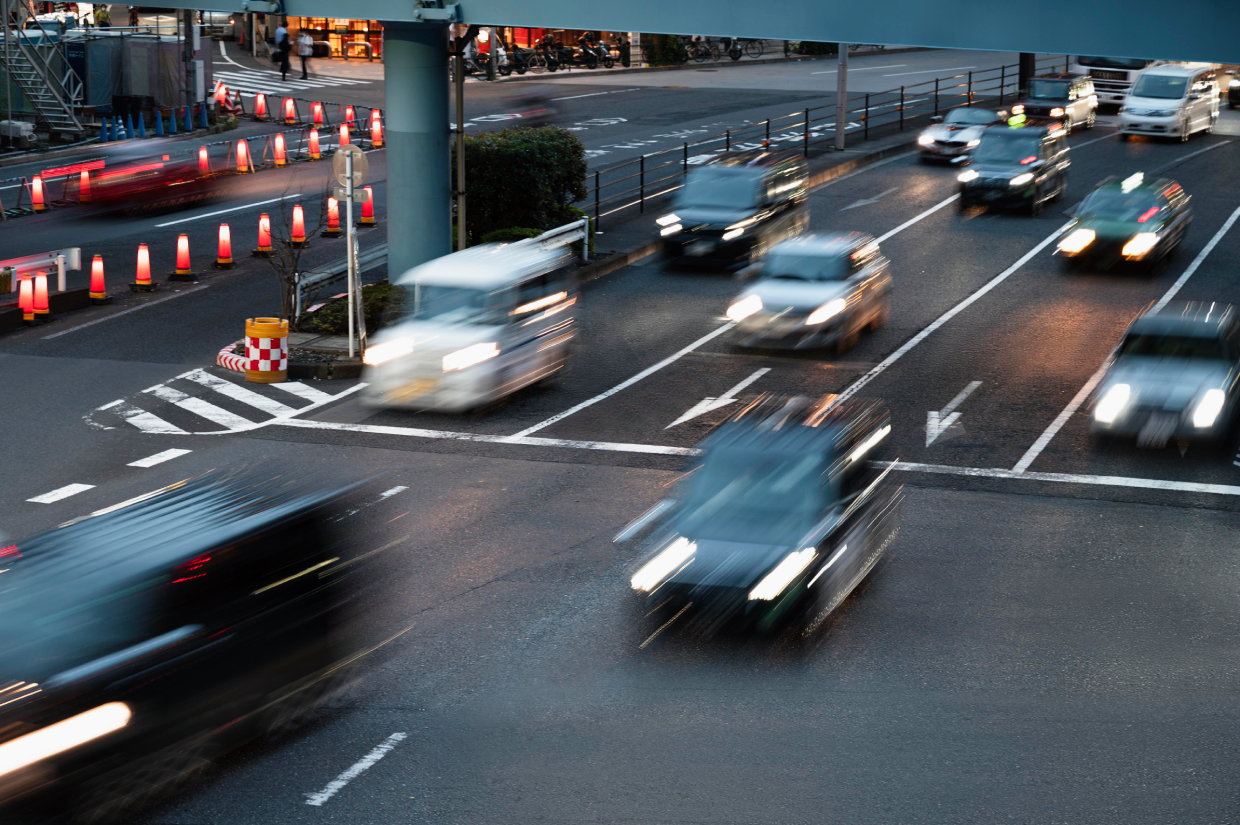
New Traffic Fine Regulations – 2026
New Traffic Fine Regulations – 2026. The year 2026 represents a turning point in the Republic of Türkiye’s road safety strategy in terms of the integration of transport law and surveillance technologies. This comprehensive reform package, implemented through the coordinated efforts of the Ministry of Interior, the Ministry of Treasury and Finance, and the General Directorate of Security, aims not only for a numerical increase in traffic fines but also to protect social peace through newly defined crime categories such as “aggressive driving” and “micro-mobility.” These radical changes to the Highway Traffic Law are built upon the foundations of full integration of Artificial Intelligence (AI) supported surveillance systems into the legal framework and maximizing economic deterrence.
Macroeconomic Foundations and the Revaluation Rate Mechanism
The financial framework for 2026 traffic fines was shaped by the Revaluation Rate (YDO) announced in the Official Gazette and effective as of January 1. The revaluation rate for 2026, determined by the Ministry of Treasury and Finance, was finalized at 25.49%, becoming the basic calculation unit for administrative traffic fines. Although this update of 25.49%, following the high increase of 43.93% applied in 2025, is seen as a stabilization effort in line with inflation targets, the cumulative effect of fine amounts in 2026 has reached the highest levels in history.
The application of the revaluation rate is based on the average 12-month Domestic Producer Price Index (D-PPI) data as of October each year, in accordance with the Tax Procedure Law. While this mechanism ensures that fines do not lose their real value against economic inflation, it also means that the financial liability on drivers is automatically updated every year. Although the President has the authority to increase or decrease this rate by 50%, the 25.49% rate determined for 2026 was applied directly; this situation triggered cost increases across a wide spectrum, from traffic insurance premiums to vehicle inspection fees.
In the collection process of administrative traffic fines, the early payment incentive continues to play a central role in 2026. According to the legislation, a 25% discount right is reserved for payments made within 15 days from the date of notification of the fine. For example, a red light violation fine of 2,719 TL drops to 2,039 TL if paid within this legal period. This practice is a pragmatic legal tool aimed at increasing the state’s collection speed while reducing the financial burden on drivers.
| Financial Item / Violation Group | 2025 Fine Amount (TL) | 2026 Fine Amount (After YDO) |
| Lowest Traffic Fine (Seat Belt, etc.) | 993 TL | 1,246 TL |
| Medium-Scale Fines (Speeding 10-30%, Phone) | 2,168 TL | 2,719 TL |
| Severe Violations (Emergency Lane, Radar 50%+) | 9.268 TL | 11,629 TL |
| Dangerous Driving (Drifting, Weaving) | 46,393 TL | 58,218 TL |
| Extreme Offenses (Aggressive Driving, Road Blocking) | — | 180,000 TL |
Combating Violence in Traffic and Aggressive Driving: 180,000 TL Sanction
The most striking article of the 2026 regulations, which has the highest social impact, is the 180,000 TL administrative fine introduced for aggressive drivers, known publicly as the “Road Fight Article.” This regulation directly targets individuals who display aggressive behavior toward other drivers in traffic, get out of their vehicles to fight, squeeze other vehicles, or block the road. In addition to the record fine of 180,000 TL, the driver’s licenses of those who commit this violation are seized for 60 days, and their vehicles are banned from traffic for 30 days.
The legal philosophy of this regulation defines traffic not just as a transportation area but as a public space where social peace must be protected. For a driver whose license is seized due to aggressive behavior, it is not enough to simply pay the fine to get the document back; they must also successfully pass a psychotechnical evaluation test and prove that they do not have a mental condition that prevents them from holding a license. If this violation is repeated for a second time within the last 5 years, the driver’s license is completely canceled, and the individual is required to enroll in a driving school and complete all processes from the beginning.
Technological Revolution in Speed Enforcement: Smart Corridor and AI Integration
As of 2026, classic radar systems on Turkish highways have been replaced by the AI-supported “Smart Corridor System.” This system, expanded to 81 provinces by the Ministry of Interior, is a mathematical surveillance model that prevents drivers from slowing down only in front of the radar camera and then accelerating again. The working logic of the system is based on the formula Road=Speed×Time; the average speed is calculated based on the distance between two surveillance points and the transition time.
Smart corridors divide the highway into segments with cameras installed every 10-20 kilometers, particularly on major arteries such as the Northern Marmara Highway, Istanbul-Izmir Highway, and Anadolu Highway. The most important feature of this system is that it includes the entrances and exits of rest facilities in the surveillance area, making the method of reducing the average speed by taking a break ineffective. In this process, AI analyzes not only speed but also lane violations and dangerous weaving movements within seconds and reports them.
| Speed Violation Rate (Urban) | 2026 Fine Amount (TL) | Legal Sanction |
| Exceeding limit by 10% – 30% | 2,719 TL | 10 Penalty Points |
| Exceeding limit by 30% – 50% | 5,662 TL | 15 Penalty Points |
| Exceeding limit by more than 50% | 11,629 TL | Risk of License Seizure |
| Exceeding limit by 66 km/h or more | 30,000 TL | 90-Day License Seizure |
AI systems are not limited to speed enforcement; they also have in-vehicle surveillance capabilities. High-resolution digital cameras can analyze the driver’s control over the steering wheel; letting go of the steering wheel completely or being occupied with non-driving objects (tablet, food, social media use) is instantly recorded as a violation by the system, and the driver is informed via SMS. This technological transparency eliminates human error in surveillance and allows drivers to see high-resolution photos of their violations on digital platforms.
Alcohol, Drugs, and Test Refusal: Aggravated Sanctions
In the 2026 traffic legislation, sanctions for driving under the influence of alcohol and drugs have been reorganized with a “zero tolerance” principle. Fines show a gradual increase depending on how many times the driver has been caught. A driver caught driving under the influence of alcohol for the first time is fined 11,626 TL and their license is seized for 6 months. In the second instance, the fine increases to 14,580 TL and the license suspension period rises to 2 years. For the third and subsequent instances, the fine is applied as 23,433 TL, the driver’s license is canceled, and legal proceedings are initiated.
One of the most critical regulations is aimed at drivers who refuse to take an alcohol or drug test. The fine for refusing the test reached figures between 33,317 TL and 60,036 TL in 2026, and a direct 2-year license seizure sanction was introduced. The fine for driving under the influence of drugs is determined as 60,037 TL, and the license is seized for 5 years for this offense. These heavy sanctions aim to establish a system where escaping surveillance does not mean escaping punishment.
| Violation Type | Fine Amount (TL) | License Sanction |
| Alcohol (1st Time) | 11,629 TL | 6-Month Seizure |
| Alcohol (2nd Time) | 14,584 TL | 2-Year Seizure |
| Alcohol (3rd Time+) | 23,437 TL | Cancellation / Legal Action |
| Alcohol/Drug Test Refusal | 60,036 TL | 2-Year Seizure |
| Driving Under Drug Influence | 60,037 TL | 5-Year Seizure + Legal Action |
Motorcycles and Micro-Mobility: New Equipment and Safety Standards
2026 has been the year of the “Equipment Revolution” for motorcycle and electric scooter users. With the regulation published in the Official Gazette on November 4, 2025, the obligation to wear “protective gloves” was introduced for motorcycle riders and passengers. Within the scope of this obligation, not just any glove, but professional motorcyclist gloves complying with the TS EN 13594 standard are accepted. The use of work gloves, cloth gloves, or leather gloves not suitable for motorcycle use is legally invalid and subject to administrative fines ranging from 1,000 TL to 1,500 TL.
The regulation also made it mandatory for riders whose helmets do not have a visor (eye protection) to wear protective goggles. During night driving (from sunset to sunrise), the obligation to wear reflective (yansıtıcı) vests or jackets covers all two-wheeled vehicle users. The harshest regulation introduced for electric scooters is on the use of vehicles on pedestrian paths (sidewalks); those who commit this violation are fined up to 5,000 TL.
The rules determined for motorcycle and scooter users are gathered on these main axes:
- Age Limit: The minimum age limit for e-scooter use remains 15, but surveillance has been tightened.
- Speed Limit: The maximum speed of scooters is limited to 25 km/h, and their use on highways and intercity roads is prohibited.
- Load and Passenger: Carrying passengers (two people riding) on scooters is strictly prohibited; the vehicle may be impounded in case of violation.
- Equipment Standards: The “EN 13594” certificate is sought in motorcycle gloves; police have the authority to check the label inside the glove during inspections.
Vehicle Registration, License Plates, and Equipment Violations
The use of fake license plates and physical interventions that prevent the legibility of the plate have entered the highest-cost crime categories in 2026. Drivers who make changes to prevent the registration plate from being read or who cover the plate are fined 140,000 TL, and the vehicle is banned from traffic for 30 days. If a driver is caught using a vehicle without a plate twice within one year, the fine increases to 140,000 TL, and the license is seized for 60 days.
The fine for using a fake plate is determined as 58,104 TL, and this crime is directly subject to legal action under the Turkish Penal Code. Similarly, sanctions against drivers using unauthorized “flashing lights” (çakar) and sirens have been increased to 173,328 TL. If this violation is repeated within one year, the fine reaches an astronomical figure of 346,785 TL. These regulations aim to break the perception of privileged driving in traffic and protect public order.
| Equipment and Registration Violation | 2026 Fine Amount (TL) | Additional Sanction |
| Preventing Plate Legibility | 140,000 TL | 30-Day Ban |
| Using Fake Plate | 58,104 TL | Legal Action |
| Using Vehicle Without Plate | 19,716 TL | Ban from Traffic |
| Unauthorized Flashing Light/Siren | 173,328 TL | Cancellation / Doubling on Repeat |
| Excessive Exhaust and Noise | 16,000 TL | Impounding Vehicle |
| Driving Without Inspection | 2.719 TL | Inspection Obligation |
Driver License Point System and Driver Rehabilitation
The 2026 regulations are not limited to fines but have also strengthened the “Point and Rehabilitation” system focusing on changing driver behavior. Penalty points determined for each rule violation result in the seizure of driver’s licenses if drivers exceed the annual 100-point limit.
Current Penalty Point Distribution and Effects
The basic penalty points recorded in drivers’ records are as follows:
- Running a Red Light: 20 Points
- Not Giving Priority at a Pedestrian Crossing: 20 Points
- Driving Under the Influence of Alcohol: 20 Points
- Not Wearing a Seat Belt: 15 Points
- Exceeding Speed Limit by 30%+: 15 Points
- Not Signaling During Turns: 20 Points
The documents of drivers who reach the 100-point limit are temporarily canceled; in the recovery process, “Driver Behavior Development Training” and psychotechnical tests are made mandatory. Seeking specialist psychiatric approval for individuals whose licenses are taken due to risky behaviors such as aggressive driving, drifting, or red light violations to return to traffic is one of the most fundamental safety mechanisms of the 2026 reform.
Socio-Economic Reflections: Logistics, Insurance, and Rental Sectors
Increases in 2026 traffic fines have directly affected not only individual drivers but also the logistics and car rental sectors, which are the lifeblood of the economy. The obligation to have a tachograph and share data in vehicles engaged in professional transport (over 3,500 kg) has maximized the surveillance of commercial driving times. Although fines for drivers violating rest periods and businesses allowing this situation create an upward pressure on logistics costs, a balancing is expected in insurance damage costs thanks to the decrease in accident rates.
In the car rental sector, the management of driver-related fines has been completely digitized. Fines issued to individuals, such as not wearing a seat belt or talking on the phone, are directly recorded to the driver’s T.R. Identity Number; fines issued to the plate, such as radar or wrong parking, are followed by the rental companies according to rental agreements and reflected to the driver. Furthermore, the absence of equipment (helmet, gloves) in motorcycle rental transactions being considered “gross negligence” at the time of an accident can lead insurance companies to reject damage payments; this situation pushes rental companies to be more meticulous about equipment rental.
Audit Transparency and e-Government Integration
The decrease in physical contact between traffic police and drivers in 2026 has increased the transparency of surveillance. Violations detected by artificial intelligence are uploaded to the e-Government (e-Devlet) system within seconds along with high-resolution digital evidence. Drivers can see the location, time, and photos of the violation through instant notifications received via SMS and e-Government; this ensures that objection processes are also concluded faster based on digital data. Heavy fines for drivers carrying radar detection devices and the fact that the average speed system makes the “sudden braking” strategy invalid have completely closed the escape routes from surveillance.
Future Projection
The 2026 traffic penalty regulations are Türkiye’s most comprehensive move toward achieving the “Vision Zero” (Zero Fatalities in Traffic) target. The 25.49% revaluation increase, the AI revolution in surveillance, and the 180,000 TL sanction for aggressive driving aim to transform traffic from a field of rule violations into an area of responsibility.
Bringing every detail, from motorcycle gloves to e-scooter use, and from fake license plates to tachograph data, into a digital surveillance network is a result of the strategy to minimize human error in traffic accidents. Drivers in this new era need to internalize the rules not just to avoid penal sanctions but to protect their own and the public’s safety. The 2026 reform has taken its place in history as a social engineering project that reconstructs Türkiye’s highway transportation culture on the basis of technology, law, and ethics. While this new order in traffic promises a safer journey for drivers who obey the rules, it has made rule-breaking an “unaffordable” cost both economically and legally.
Önceki Yazılar

Processes for Identifying Children Born Out of Wedlock
Processes for Identifying Children Born Out of Wedlock. In the Turkish Civil Law system, lineage…

Cancellation of Enforcement Proceedings by the Debtor – 2026
Cancellation of Enforcement Proceedings by the Debtor – 2026. The Turkish execution law system aims…

The Principle of Equalization in Inheritance Distribution
The Principle of Equalization in Inheritance Distribution. Inheritance law is a complex discipline that regulates…