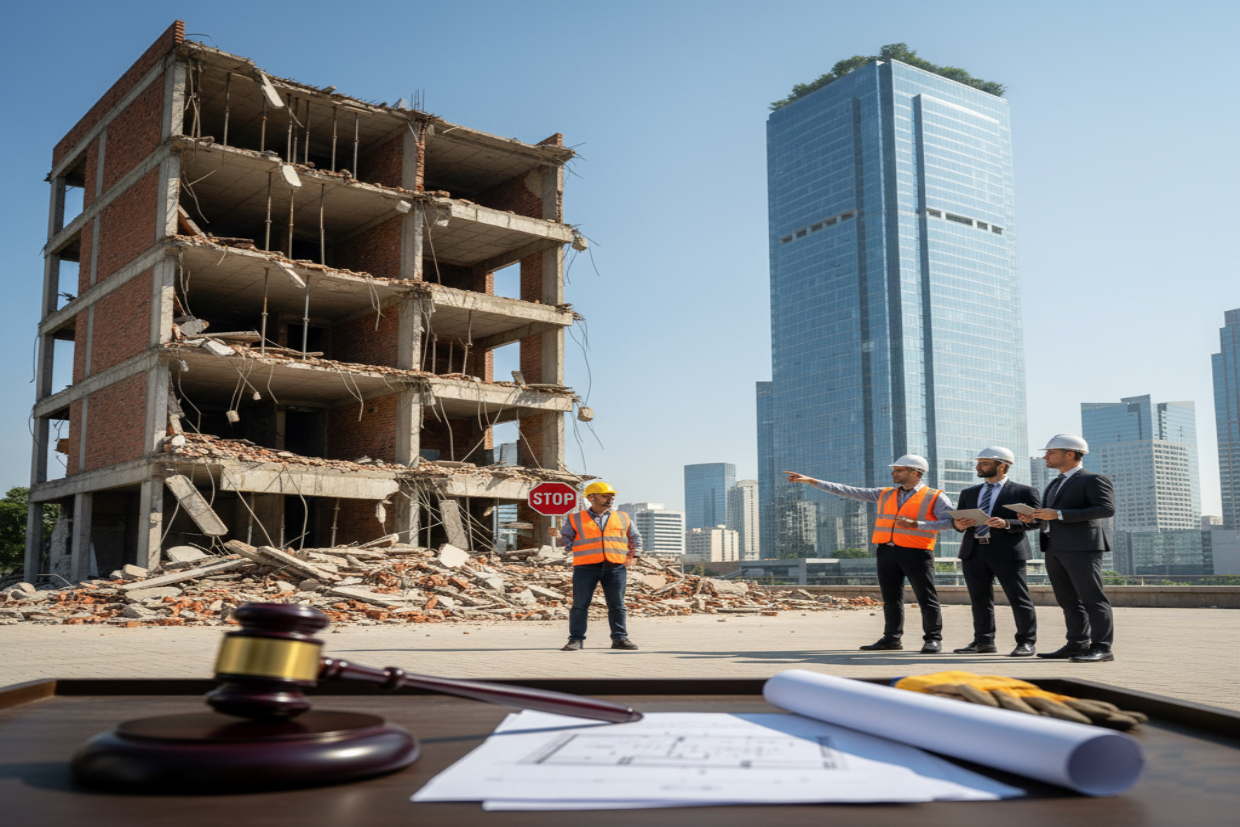
Urban Planning Law – Penalties for Illegal Construction
Urban Planning Law – Penalties for Illegal Construction. The planned growth of cities is primarily enabled by urban development law. This legal field extensively regulates all construction processes. Urban development law aims to create safe and healthy living spaces. It strives to enhance the quality of life for all residents. Public benefit forms the fundamental basis of these regulations. Structures that violate urban regulations are characterized as illegal. Illegal structures severely disrupt urban order. Furthermore, they pose significant risks to both life and property. The Urban Development Law offers robust legal solutions for such problems. Laws are enacted with the ultimate goal of protecting the common good. The objective is to bequeath more livable cities to future generations. This elevated purpose profoundly shapes the foundation of urban development law. Therefore, understanding urban development law is critically important.
1. The Legal Definition and Forms of Illegal Construction
An illegal structure is a building constructed in complete defiance of legal provisions. Typically, construction has commenced without obtaining a building permit. Sometimes, even with a permit, unauthorized additions or alterations have been made. Situations that contravene urban plans and existing regulations are also deemed illegal. For instance, an unauthorized increase in a building’s height is a clear example. Illicit modifications to the number of floors also constitute an illegal condition. Moreover, non-compliance with parcel setback distances is a frequently observed violation. Such structures possess no legitimate legal basis whatsoever. Consequently, they are subjected to severe legal sanctions. These sanctions encompass both administrative and criminal penalties. An illegal structure is not merely a violation but also a societal problem. Its environmental impacts cannot be overlooked.
2. The Process of Detecting and Documenting Illegal Structures
Illegal structures are identified by authorized administrative bodies. This authority primarily rests with municipalities and governorships. Teams affiliated with the administration conduct regular on-site inspections. Action can also be initiated based on a tip-off or complaint. Every situation detected during an inspection is meticulously documented. These findings are formally recorded in a detailed report. The report explicitly specifies the structure’s condition, location, and the nature of the violation. This report is considered the official commencement of the administrative process. The owner of the structure is officially notified of the situation. With this notification, the legal process is formally initiated. The owner is granted a specific timeframe. Within this period, the owner is required to rectify the violation. Otherwise, legal sanctions will be applied by the administration.
3. Application of Administrative Sanctions: Administrative Fines
Detected illegal structures are subject to stringent administrative sanctions. The primary sanction is an administrative fine. This fine is regulated by Article 42 of the Urban Development Law (Law No. 3194). The amount of the fine is closely correlated with the condition of the structure. The building’s footprint, construction area, and value are taken into consideration. The quality of the materials used also influences the fine amount. Furthermore, the structure’s location and its position within the urban plan are significant. The fine amount is left to the discretion of the relevant administration. However, this discretionary power must be exercised within legal limits. The fine notification is delivered to the owner of the structure. Following notification, payment must be made within a specified period. If payment is not made, the fine is collected as a public receivable. This sanction represents a financial consequence of the legal violation.
4. Application of Administrative Sanctions: Demolition Order and Process
In addition to administrative fines, a demolition order is often issued. This decision is made with the aim of completely removing the illegal structure. The demolition order is officially served to the owner by the relevant administration. The owner is granted a specific period. Within this timeframe, the owner is requested to demolish the structure themselves. If demolition is not carried out within this period, the administration undertakes the demolition. All expenses incurred by the administration for the demolition are subsequently collected from the owner. If these costs are not paid, collection proceeds under public receivable provisions. This process aims to ensure public order. The prompt removal of unsafe and dangerous structures is paramount. Legal processes oversee the fair implementation of this decision. Demolition orders also play a significant role in urban transformation projects.
5. Legal Avenues Against Illegal Construction: Appeal and Litigation Processes
For structure owners, legal avenues are available against administrative sanctions. The owner can appeal both the administrative fine and the demolition order. An appeal is initiated by filing a lawsuit in the administrative court. The deadline for filing a lawsuit begins from the date the decision was notified. This period is typically 60 days. During the lawsuit, a request for a stay of execution can be made. This request temporarily suspends the demolition order’s implementation. The decision to grant a stay of execution rests with the court’s discretion. Legal support is of vital importance at this stage. An attorney’s assistance ensures the proper management of the case. This significantly helps prevent the loss of rights. If the initial appeal is rejected, an application can be made to a higher court.
6. The Role of Urban Transformation in Combating Illegal Structures
Illegal structures play a central role in the urban transformation process. Urban transformation projects aim to replace these types of unhealthy structures with new ones. These projects are critically important for building earthquake-resistant and well-planned cities. Urban transformation can fundamentally resolve the illegal structure problem. However, not every illegal structure can benefit from this process. In the past, regulations such as urban peace (imar barışı) were introduced. These regulations aimed to legalize illegal structures under specific conditions. Yet, such regulations offer temporary, rather than permanent, solutions to the problem. The true and lasting solution involves encouraging a legally compliant construction process.
7. Protection of Rights and the Importance of Legal Consultation
Urban Planning Law – Penalties for Illegal Construction. Urban development law is a highly technical and complex field. Therefore, obtaining legal consultation is of paramount importance. A lawyer ensures that your rights are defended in the most effective manner. They assist you in accessing accurate information regarding the process. They ensure that legal avenues are utilized correctly and promptly. Thus, both your individual rights are protected, and the public interest is served at the highest level. Building planned and safe cities is a shared responsibility, not just of the administration. In this context, every individual is expected to respect urban development law. Legal awareness forms the bedrock of healthy cities.
Önceki Yazılar

The 7-Step Concordat Process: A Legal Guide for Companies
The 7-Step Concordat Process: A Legal Guide for Companies. In the business world, where economic…

Tax Dispute Appeal Processes and 10 Important Facts
Tax Dispute Appeal Processes and 10 Important Facts. Taxes are the most fundamental source of…

The Most Important Step in Buying Real Estate
7-Point Sales Promise Agreement The Most Important Step in Buying Real Estate. Real estate purchase…