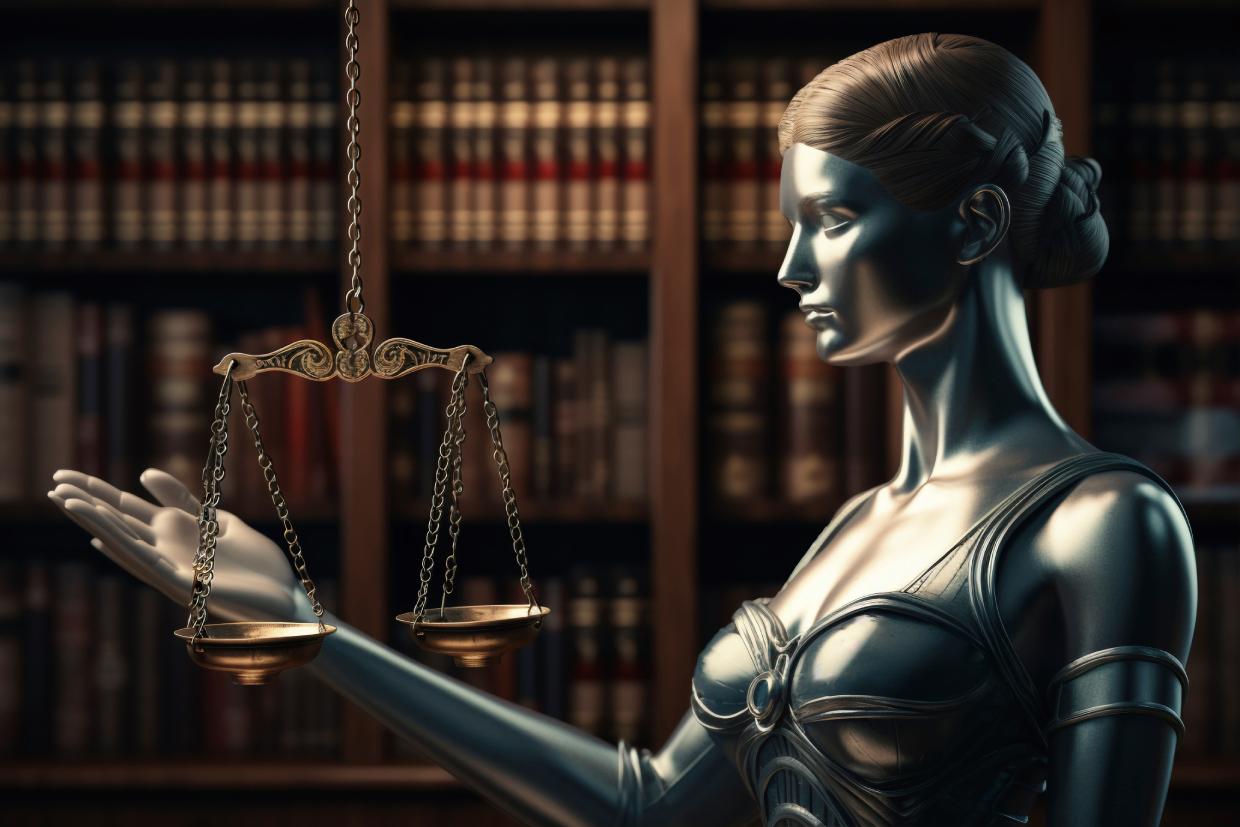
Who bears legal responsibility for AI-related decisions?
Who bears legal responsibility for AI-related decisions? The integration of artificial intelligence systems into decision-making mechanisms is forcing a radical transformation of the concept of “responsibility,” one of the fundamental pillars of modern legal theory. Traditional legal systems require either a fault-based action by an intentional agent or a lack of control over an object for a harm to be compensable. However, the operation of machine learning and deep learning algorithms—particularly the “black box” structures that lack transparency—breaks this classic causal link. As the autonomy of algorithmic decisions increases, the question of which human actor (developer, user, data provider, or operator) is liable for the resulting harm gives rise to the “accountability gap,” a legal area of uncertainty. This analysis covers the distribution of legal liability arising from autonomous AI decisions, international regulatory efforts, the Turkish perspective, and sectoral case studies with academic depth.
The Ontological Nature of AI Decisions and Liability Theories
In legal theory, the position of AI fluctuates on the boundary between a “tool” and an “agent.” The traditional approach defines AI as a tool, regardless of its complexity. According to this “instrumentalist” view, just as a hammer is an extension of its user’s hand, AI is merely a technical instrument reflecting the will of its designer or user to the outside world. However, modern algorithms possess the capability to update their own parameters and produce decisions beyond the initial design purpose without human intervention. This situation implies that the tool exceeds the agent’s will, at which point the classic tool assumption fails.
The Triple Helix of the Accountability Gap: Autonomy, Association, and Network Risk
The accountability gap in legal literature refers not only to the inability to find a perpetrator but to the fact that a decision cannot be legally attributed to any subject due to its technical nature. This gap is shaped by three primary risk factors:
- Autonomy Risk: The system exhibiting unpredictable behaviors by moving beyond pre-programmed instructions.
- Association Risk: The decision getting lost within a “distributed production structure” ranging from code writers to data labelers.
- Network Risk: Multiple algorithms interacting with each other (e.g., in financial markets or autonomous traffic systems) to create a collective and unpredictable outcome.
| Element of Liability | Traditional Legal Expectation | AI Reality | Legal Consequence |
| Agent | Identifiable natural or legal person with intent. | Distributed, multi-actor, and autonomous systems. | Fragmentation of responsibility. |
| Fault | Negligence, intent, or breach of duty of care. | Inability to understand internal logic due to the “black box” nature. | Inability to prove fault. |
| Causal Link | Action “A” directly caused result “B”. | Decisions evolving through the algorithm’s self-learning process. | Severance of the causal link. |
| Predictability | A reasonable person should foresee the harm. | Even developers cannot precisely predict system outputs. | Erosion of fault-based liability. |
European Union Regulations and the Collapse of the AI Liability Directive
The European Union followed a two-pronged strategy to manage AI risks. The first is the AI Act, which regulates the safety and market entry conditions of systems, and the second is the AI Liability Directive (AILD) proposal, intended to regulate the compensation of resulting damages. However, as of 2025, the process regarding liability law has resulted in a significant stalemate and withdrawal.
The AILD Proposal and the Attempt to Ease the Burden of Proof
The AILD proposal submitted in 2022 introduced two revolutionary procedural rules to protect victims against the complex nature of AI. First, it established a “rebuttable presumption of causality,” where if a high-risk system violated AI Act rules, the harm would be presumed to stem from that system. Second, it granted national courts the power to mandate the “disclosure of evidence” regarding the internal workings of the system. These mechanisms aimed to prevent victims from being overwhelmed by technical impossibility.
The 2025 Withdrawal Decision and Its Reasons
On February 11, 2025, the European Commission announced the withdrawal of the AILD proposal in its 2025 work program. This decision is considered a turning point in the history of AI governance. The primary reasons for the withdrawal include:
- Lack of Consensus: Deep disagreements between member states and the European Parliament regarding the scope of the directive and the transition to a strict liability regime.
- Competitiveness and Innovation Concerns: Pressure from the technology industry, arguing that strict liability rules would turn Europe into a “litigation hub” and drive investments to the US or China.
- Regulatory Overlap: The revised Product Liability Directive (PLD) already covering software and AI as a “product.”
With AILD officially falling through by October 2025, 27 different national systems were preserved instead of a harmonized liability law across the EU, leading to legal fragmentation for companies operating across borders.
AI Liability in Turkish Law: Current Regime and Analogous Applications
Turkey does not yet have a specific “AI Law.” This situation necessitates the application of provisions from the Turkish Code of Obligations (TBK), the Turkish Civil Code (TMK), and the Law on Consumer Protection (TKHK) by analogy in disputes arising from AI decisions.
Fault and Strict Liability within the Scope of the Turkish Code of Obligations
According to TBK Art. 49, a person must be at fault to be held liable for a tort. However, in cases where the “decision” is made by the AI itself, proving the “fault” of the user or producer is nearly impossible. Therefore, Turkish legal doctrine focuses more on cases of strict liability (liability without fault):
- Liability of the Employer (TBK Art. 66): It is possible to hold a business owner who uses AI as an “electronic assistant” liable for damages unless they can provide proof of release.
- Liability for Dangerous Activities (TBK Art. 71): If the AI system is part of an activity that inherently poses a high risk (e.g., autonomous energy distribution or heavy industrial robots), the operator will be liable regardless of fault.
- Equity Liability (TBK Art. 65): Parallel to the liability of those lacking the power of discernment, even if the status of AI is accepted as an “object,” a judge may decide on compensation if equity requires it.
Turkish Civil Code and Consumer Law Perspective
The “head of household” liability regulated in TMK Art. 369 covers damages caused by individuals under supervision (minors, those restricted). Positioning AI as a kind of “entity under intangible supervision” could impose a responsibility on the user similar to the duty of care of a head of household. On the other hand, under the TKHK, an incorrect decision by an AI system (e.g., wrong investment advice or faulty medical guidance) could be evaluated within the scope of “defective service” or “defective goods,” giving rise to the joint and several liability of the producer.
The Electronic Personhood Debate: Practical Need or Philosophical Illusion?
The proposal to grant AI an “electronic personhood” status, moving it beyond being a “tool,” is one of the most controversial topics for the future of liability law. This status, brought to the agenda by the European Parliament’s 2017 Robotics Report, envisages granting certain rights and obligations to AI.
Legal Justifications for the Personhood Proposal
Views supporting personhood base it on the practicality of the “legal entity” (corporation) model rather than a resemblance to humans.
- Asset Fund and Insurance: Granting personhood to AI allows it to have its own assets or insurance policy. When harm occurs, the victim can directly sue the AI’s fund instead of a human.
- Ancient Roman Slave Law Analogy: Some jurists compare autonomous but not fully free AI to slaves who managed businesses (peculium) in Ancient Rome. In this model, the slave (AI) can make decisions but is liable only through a limited set of assets, with ultimate responsibility resting with the master (owner).
Counter-Arguments and the Fear of “Abjection”
Opponents of granting personhood worry that it will create a “liability shield” for companies. A company could register a risky AI as a “person” and escape all responsibility by keeping its capital low. Furthermore, as explained by Julia Kristeva’s philosophical theory, granting personhood to AI is perceived as a threat to human “uniqueness” and is rejected with a sense of “abjection” (exclusion/disgust). Humans do not want to share the “intelligence” they use to define themselves with an artificial entity, which complicates the granting of legal status.
Sectoral Liability Analysis and Case Studies
AI liability gains clarity through application forms in vertical sectors rather than theoretical discussions.
Autonomous Vehicles: Shifting from Driver Fault to Producer Error
Autonomous vehicles (AVs) eliminate the concept of the “driver” at the heart of traditional traffic law. Although the 1968 Vienna Convention on Road Traffic requires a vehicle to be controlled by a human driver at all times, Level 4 and 5 autonomy renders this rule dysfunctional.
| Automation Level | Decision Mechanism | Legal Subject Liable | Applied Regime |
| Level 0-2 | Human Driver (Assisted systems on) | Human Driver | General Traffic Law / Fault Liability. |
| Level 3 | System (Human on standby) | Shared Liability | Mixed Regime (Handover time debate). |
| Level 4-5 | Full System | Producer or Operator | Product Liability / Strict Liability. |
When a Level 5 vehicle crashes, “driver fault” cannot be sought. At this point, a “reasonable computer driver” standard is proposed instead of a “reasonable human driver” standard. If the accident is a situation that other competing systems on the market could have avoided, it is argued that the producer should be held liable due to a design defect.
Medical Applications: Diagnostic Support Systems and the “Malpractice” Dilemma
The use of AI in medicine both alleviates the doctor’s responsibility and adds new risks.
- Ambient AI Scribe: In AI systems that listen to doctor-patient consultations and take notes, a misunderstanding of a word could lead to the wrong treatment. If the doctor signs the note without checking, they are fully liable for negligence; however, if the error is an algorithmic deviation within the system, they may seek recourse from the producer.
- Diagnosis and Decision Support: Hundreds of AI devices are approved by the FDA. However, when these devices offer a recommendation, should the doctor follow it? A doctor who fails by not following the AI may be accused of “not using the possibilities of modern medicine,” while a doctor who fails by following the AI may be accused of “delegating clinical judgment.”
Financial Algorithms: Knight Capital and Systemic Risk
Algorithmic trading can shake markets by making decisions at the speed of a millisecond. The Knight Capital case in 2012 saw a dormant code (Power Peg) accidentally triggered, causing the company to lose $460 million in 45 minutes and bringing it to the brink of bankruptcy.
- Determination of Liability: The SEC defined the cause of the damage not as a “software error” but as the company’s “failure to have adequate risk management and technology governance controls” and penalized the institution.
- Flash Crash: In cases where multiple algorithms trigger each other’s reactive sales and crash the market, the “causal link” is so complex that finding a single responsible party becomes impossible. This necessitates a shift in financial law from “individual fault” to a “systemic resilience” focused liability model.
Distribution of the Burden of Proof and the Necessity of Algorithmic Transparency
The biggest obstacle for victims in AI lawsuits is ignorance of the system’s internal workings. The “black box” problem prevents the victim from proving fault or the causal link.
Reversing the Burden of Proof and Presumptions
Proposed models to remedy the victim’s disadvantage include:
- Presumption of Error: When an AI system causes unexpected harm, the system should be presumed “defective” until proven otherwise.
- Right to Information: The plaintiff should be granted the right to “discovery and inspection” of the system’s training data, log records, and algorithmic logic.
- Explainability Standard: The law should demand not only that AI makes “correct” decisions but also that it provides a “justification” understandable by humans.
Discrimination in Employment and Algorithmic Accountability
AIs used in recruitment processes may unintentionally filter out certain age, gender, or ethnic groups. The 2025 Mobley v. Workday case showed that AI providers can also be held liable for discrimination as “intermediary institutions.” Here, liability is established through “disparate impact” rather than “intentional discrimination.”
Future Projections: Mandatory Insurance and Audit Mechanisms
The directions in which legal systems will evolve to close the AI accountability gap are becoming clear.
Mandatory Liability Insurance
Just as with traffic insurance, “Mandatory AI Insurance” for those operating or developing AI systems is inevitable.
- Mechanism: When harm occurs, the insurance pays without the victim needing to prove fault. The insurance company determines premiums by auditing whether the system complies with safety standards. This ensures the socialization of risk.
- Industrial Funds: For “anonymous” algorithmic harms where a specific perpetrator cannot be found, compensation funds created with contributions from sector stakeholders can intervene.
Human-in-the-Loop and Ethical Standards
To preserve legal responsibility, the principle that the “ultimate decision-maker must be human” (human-in-the-loop) must become a legal requirement. However, this supervision should not be “rubber-stamping.” A doctor or a loan officer must have the “professional judgment” capacity to explain why they approved or rejected the AI’s suggestion. Ethical principles published by the OECD and UNESCO require this human oversight to be part of the technical design.
General Assessment
Legal liability in AI decisions is a process too complex and dynamic to be loaded onto a single actor. Traditional fault-based liability remains insufficient in the face of AI’s autonomy and “black box” structure. The EU’s AILD withdrawal move in 2025 indicates that legislation in this field is not yet mature and that economic concerns have taken precedence over the search for legal clarity.
From the Turkish perspective, although current obligations law and consumer legislation offer solutions through “analogy,” they struggle to meet the specific risks created by autonomous systems. Future regulations should focus on a structure where the burden of proof is shared in favor of the victim, mandatory insurance mechanisms are operated, and the producer’s “liability by design” is emphasized, rather than radical statuses like “electronic personhood.” No matter how smart AI becomes, the goal of the legal system is not to punish technology but to protect the balance between the welfare created by technology and the rights of individuals harmed in the process. Ultimate responsibility must always remain within “human intent,” which designs, trains, and presents the system to society; for justice is not a statistical probability, but a moral decision.
Our Latest Articles
Önceki Yazılar

10 Key Details in Cybercrime
10 Key Details in Cybercrime. The central positioning of information technologies in global social, economic,…

6 Key Facts About Search Engines and Being Forgotten
6 Key Facts About Search Engines and Being Forgotten. The global expansion of the internet…

Hidden Costs in Consumer Credit Agreements
Hidden Costs in Consumer Credit Agreements. Consumer law is a “social protection” legal framework designed…